Crypto Ownership by Generation: Who Leads?
These generations are guaranteed to reshape the future of finance, and the numbers behind crypto adoption are becoming impossible to ignore.
Why Gen Z Trusts Crypto More Than Banks
The younger you are, the more likely you are to trust cryptocurrency platforms over traditional banks. And this is no longer just internet speculation — surveys now show a massive generational divide in how people view money itself.
According to a recent OKX-sponsored survey of 1,000 Americans, around 40% of Gen Z and 41% of Millennials said they highly trust crypto platforms. Among Baby Boomers, that figure falls to just 9%. This would simply be an interesting cultural trend if trillions of dollars were not about to change hands. But they are.
The Great Wealth Transfer — considered the largest intergenerational transfer of assets in history — is already underway. According to Cerulli Associates, Baby Boomers and the Silent Generation are expected to pass down roughly $84 trillion through 2045. Millennials are projected to inherit around $46 trillion, while Gen Z alone could receive approximately $15 trillion.
These generations trust decentralized finance far more than traditional institutions.
The Generational Divide in Crypto Ownership
Recent global studies show a very clear pattern. Younger investors dominate cryptocurrency adoption.
According to Gemini’s latest global research:
- Millennials: 52% currently own or previously owned cryptocurrency
- Gen Z: 48% have experience with digital assets
- Gen X: 26%
- Baby Boomers: 11%
The gap is enormous.
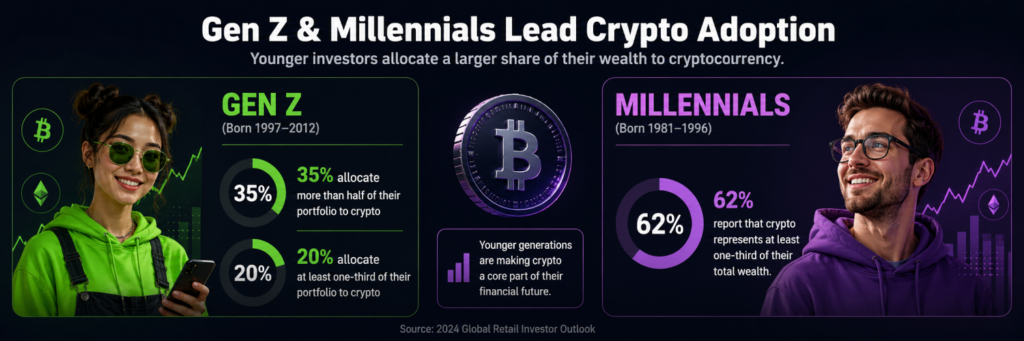
For younger investors, crypto is no longer alternative investing. Around 35% of Gen Z allocates over half their portfolio to crypto, while 62% of Millennials say crypto makes up at least one-third of their wealth. For older generations raised around banks and pensions, this sounds irrational.
Why Crypto Feels Natural to Gen Z
And unlike previous generations, many of Gen Z already believe the future of money exists outside the banking system. Plus, generation Z grew up online. This sounds simple, but it changes everything.
This generation played games with digital economies, bought virtual skins, interacted through apps, and spent years inside online ecosystems before entering adulthood. For many of them, digital ownership already felt normal long before Bitcoin entered mainstream culture.
Buying crypto through a mobile app often feels more intuitive to Gen Z than opening a traditional brokerage account.
Technology also lowered the barriers dramatically. A few decades ago, investing required brokers, paperwork, and large amounts of starting capital. Today, a teenager can buy fractional crypto assets within seconds using only a smartphone.
Apps made investing feel accessible. AI tools made financial information easier to understand. And social media transformed investing into an everyday conversation.
According to World Economic Forum findings, nearly 30% of Gen Z began investing before fully entering the workforce. That is far higher than Millennials or Gen X at the same age.
Many younger investors also use AI tools to research markets, summarize financial reports, or analyze portfolios. Around 41% of Gen Z investors say they would trust AI systems to help manage their investments. For previous generations, finance often looked intimidating and institutional.
The Economic Pressure Behind the Trend
It is also deeply connected to economic anxiety. Traditional paths toward wealth feel less reliable than they did for previous generations. As a result, younger people increasingly look for alternative ways to build financial independence.
The possibility of exponential gains — even if highly risky — appeals to a generation that often feels financially squeezed. Stories about early Bitcoin adopters becoming millionaires spread rapidly across YouTube, Reddit, TikTok, Discord, and X.
For many young investors, crypto represented opportunity outside traditional systems. And unlike banks, crypto communities feel participatory.
The Risks Younger Investors Face
However, it also comes with serious dangers.
The crypto market never closes. Prices move 24 hours a day, seven days a week. For some younger investors, trading slowly becomes less about investing and more about emotional stimulation.
This is one reason many experts compare parts of crypto culture to gambling.
The BBC previously documented stories of young traders losing large amounts of money after entering crypto markets during hype cycles. Some described constant stress, compulsive chart checking, and emotional burnout.
The structure of crypto itself contributes to this.
Many younger users first entered digital assets through NFTs, “play-to-earn” games, or online trading communities where speculation feels entertaining and social. Apps are designed to maximize engagement, notifications, and fast reactions.
This creates a strange combination:
Gen Z often behaves both more financially aware and more financially risky than previous generations.
Some focus heavily on ETFs and long-term investing. Others chase memecoins, leverage, and short-term speculation. And many move between both worlds simultaneously.
Why Traditional Finance Is Losing Younger Users
One of the reasons is the lack of trust in traditional institutions.
Many Gen Z investors watched economic crises, inflation spikes, bank failures, rising debt, and shrinking affordability while growing up. Banks often feel slow, bureaucratic, and disconnected from modern digital culture.
Crypto presents itself as the opposite:
- decentralized,
- transparent,
- borderless,
- community-driven,
- and independent from centralized control.
Even if crypto remains volatile, its philosophy aligns closely with how younger users already interact with technology and information.