Best 7 Crypto Portfolio Trackers in 2025 – Who’s Really №1?
Investing in crypto in 2025 looks little like the early days of excel sheets and disjointed notes. Portfolios span centralized exchanges, decentralized exchanges, NFT holdings, and yield farming protocols. It requires more than casual observation to keep track of all of it – it requires systematic tools capable of displaying a cohesive, correct picture in real time.
Short-term variation makes the problem more of an emergency. Volatility of a day can convert ROI into double figures and with inconsistent data, investors are making blind bets. Trackers of professional quality are no longer a luxury with assets passing faster through chains and wallets.
From spreadsheets to specialized trackers
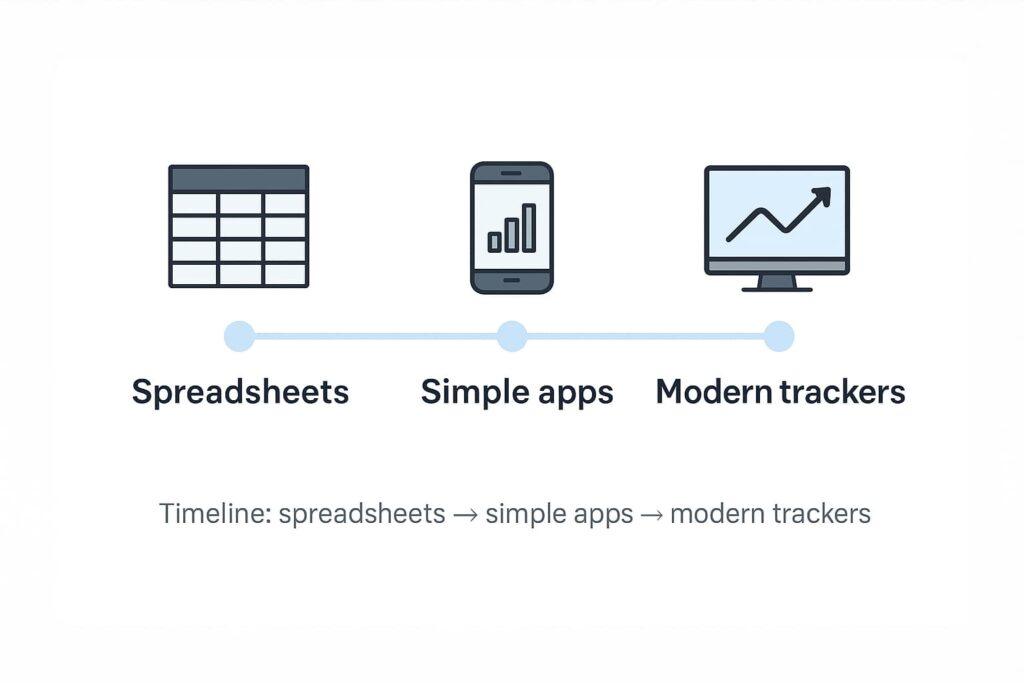
Even through the 2010s, a majority of portfolios were feasible with Google Sheets or Excel. Early adopters also simply kept and calculated gains by hand. It didn’t last long once DeFi, NFTs, and multi-chain use were a part of the mix. Tracing one’s balances across exchanges and hundreds of addresses became error-prone and a chore.
For professional portfolio trackers, which fill this gap, they connect through APIs and scan blockchains at the blockchain level and report performance history with no room for human error. Such a toolset becomes standard issue in anyone’s digital assets panoply around 2025.
What Makes a Portfolio Tracker Reliable Today
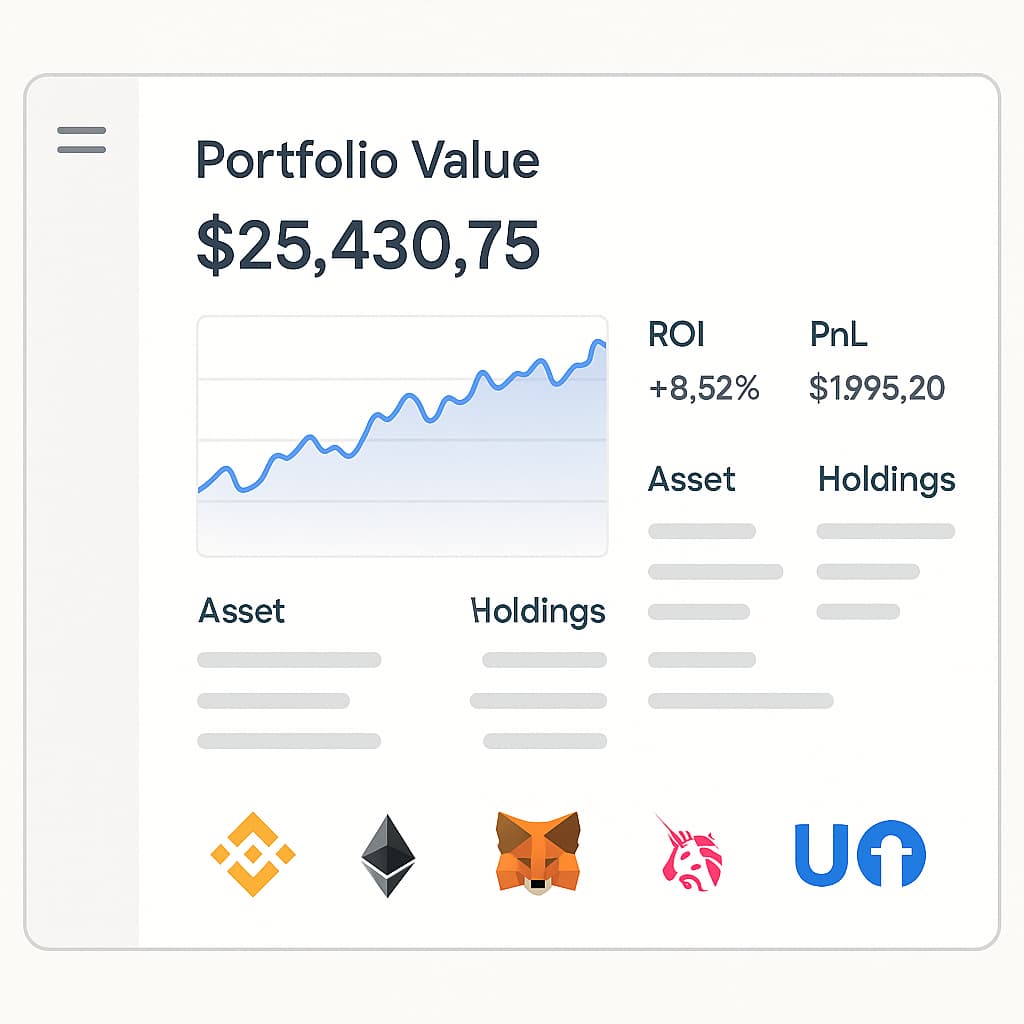
Today’s investor wants accuracy before anything. Every trade, transfer, and staking reward should automatically get recorded with no ongoing manual input. Accuracy of PnL and ROI calculation makes or breaks whether the tracker can be trusted. Even small discrepancies are suspicious and may prompt the use of alternative software.
Integration depth matters equally. A good tracker needs to integrate with centralized exchanges, with DeFi protocols, and with self-custody wallets. Leaving out one of those sources leaves blind spots that distort the big picture. And last of all, usability matters: clutter-free dashboards, active interfaces, and customizable export facilities. Those tools that require technical expertise to use cannot make traction beyond niche audiences.
Challenges investors face without proper tools
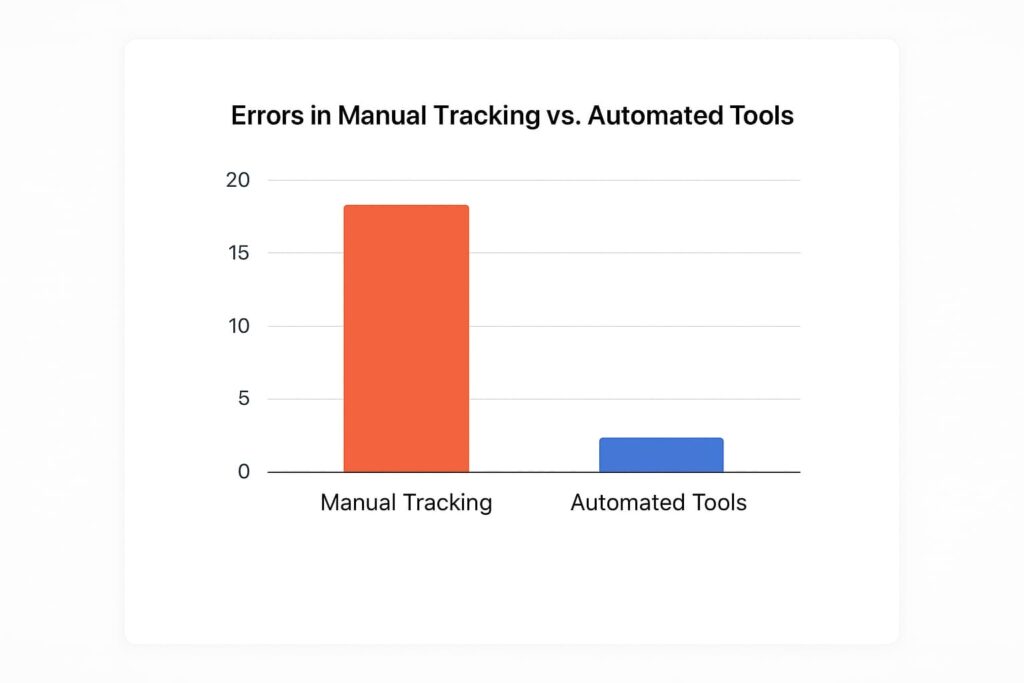
Without professional tracking systems, investors face three recurring problems:
- Inconsistent records: Transfers between wallets often get double-counted or missed entirely.
- Tax complexity: Dozens of transactions across multiple chains create a nightmare when compiling annual reports.
- Decision paralysis: When market conditions change rapidly, unreliable data makes timely reactions nearly impossible.
“When your tracker shows numbers you can’t trust, every decision feels like a gamble.”Case example: An investor with assets diversified across Coinbase, MetaMask, and a few DeFi yield websites makes an unsuccessful attempt at a manual PnL calculation. Despite best efforts at note-taking, staking rewards and small swap fees slip through the cracks. Come tax season, this becomes a tedious process of reconciliation that often translates into error costing money or peace of mind.
Comparison of Popular Crypto Portfolio Trackers in 2025
1. CoinDataFlow
https://coindataflow.com/en/portfolio-tracker
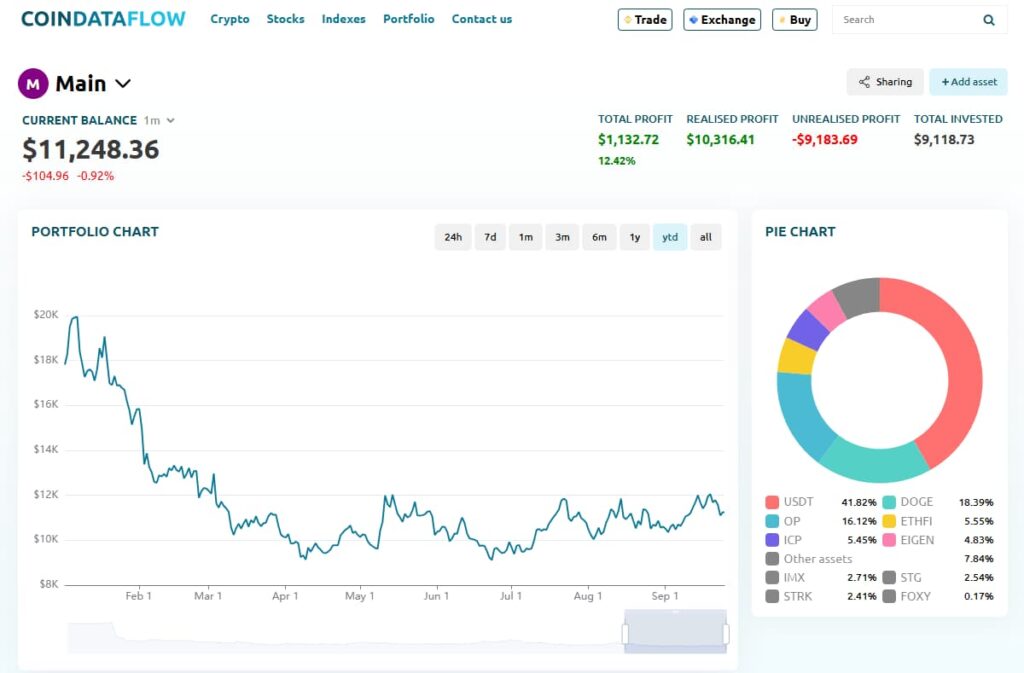
CoinDataFlow also differs from a number of competitors by offering a combination of crypto data aggregation and portfolio monitoring. Where others rely on lagging feeds or selectively combined integrations, the system connects exchanges, wallets, and on-chain protocols directly. ROI and PnL are recalculated automatically and show both realized and unrealized performance.
Key strengths: accuracy of ROI/PnL, integration with market data
For investors moving assets across a wide variety of ecosystems – from Binance spot purses through MetaMask wallets and stake pools – this accuracy matters. Trades are automatically tied together, with no spreadsheet manipulation. That consistency breeds confidence in numbers appearing, making investors feel safe as markets whip back and forth.
Example: Imagine transferring ETH from Binance to a self-custody wallet, staking it in Lido, then later selling part on Coinbase. CoinDataFlow records the cost basis, staking rewards, and sale proceeds across all three platforms. The result is an uninterrupted PnL timeline that reflects true gains and losses.
Weak spots (minor compared to others)
No system is ideal. CoinDataFlow’s wide dashboards will appear cluttered to customers seeking much less than a glance at a balance. Newbies seeking a “one number at a glance” may feel the interface displays more analytics than desired. However, next to limitations of a type commonplace with competitors’ systems, this is a small setback.
Why it feels ahead of the competition
What sets CoinDataFlow apart from the others is the joining of research and portfolio tracking. Most tools split these capabilities – a price and news program and a personal portfolio program. Here, both are melded together: real-time charts, calculation of ROI, tax-compliant exportability, and multi-asset coverage (including vanilla finance like stocks and ETFs). Versatility this high makes the program useful not only among retail traders but also among family offices and semi-pro managers. When you throw in the privacy regime – non-custodial, read-only APIs and local encryption – it adds luster. With all things considered, CoinDataFlow heads the class for 2025.
2. MetaTracker
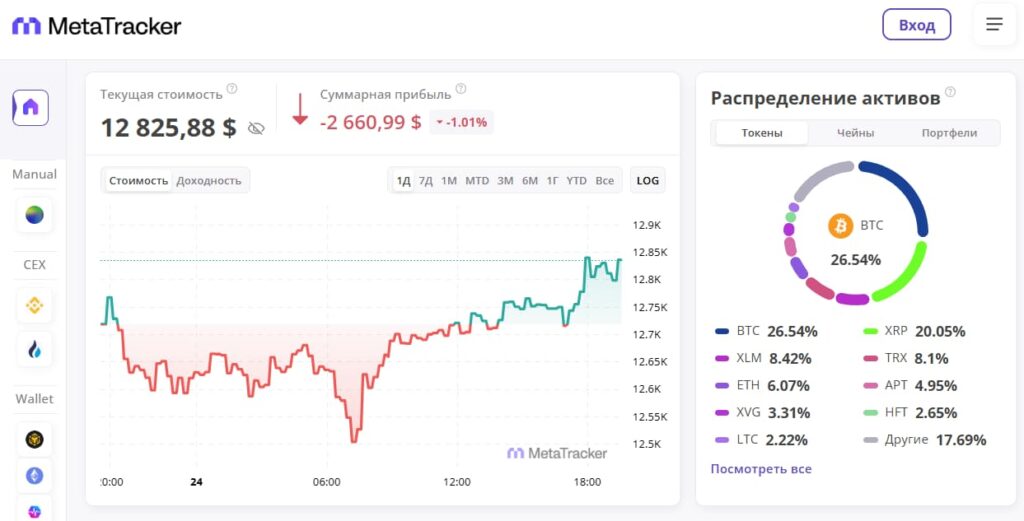
MetaTracker offers itself as a beginner-friendly platform. Signing up takes mere minutes, and you can input assets manually without wrestling with sophisticated API keys. For beginners, this has appeal: they get to view the balances, the percent changes, and simple charts without being overwhelmed with professional-level analytics.
Simplicity and accessibility
Its phone-only interface makes it easy to use. Most of its features are implemented as a lightweight smartphone app. Its simplicity helps one appreciate why first-timers at crypto investing are apt to start with MetaTracker and branch out from there.
Example: A user who just purchased their first BTC and ETH on Coinbase can open MetaTracker, type in the holdings, and instantly get a basic portfolio view. No technical knowledge required.
Limitations for advanced users
While MetaTracker excels at the beginner level, simplicity is a limitation. MetaTracker doesn’t offer an automatic API sync of the DeFi wallets, no tax-ready reports available, and no in-depth performance history. Investors with a need for ROI across a number of years will find the reports shallow.
Also, no automation means manual updating of transactions. It’s good for an individual with two or three assets, but as business grows – active trading of tokens or alts, token staking, or inter-blockchain operations – the process becomes inefficient.
“MetaTracker works like training wheels: perfect at the start, but you’ll outgrow it once your portfolio expands.”
3. Shrimpy
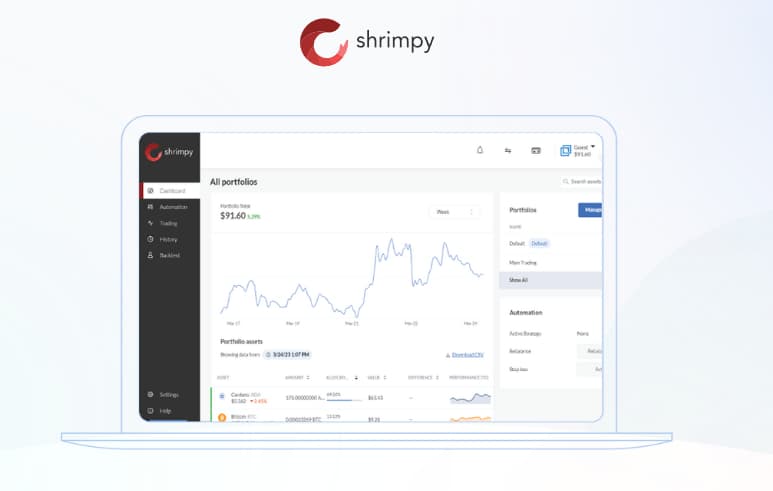
Shrimpy is often chosen by customers who favor automation over manual control. It has portfolio rebalancing according to predefined strategies through copy trading and auto-diversification. With the connection of exchange accounts through their APIs, the platform gets to automatically perform trades and rebalance holdings proportionately with target allocations.
Automation features
For active traders or experimenting with strategy-based investing, this automation truly saves a lot of time. Rather than accessing several exchanges, tuning orders, and recalculating proportions, the system takes care of it in the background.
Example: A user sets a rule to keep 40% BTC, 30% ETH, and 30% altcoins. When ETH rises and unbalances the allocation, Shrimpy automatically rebalances by selling part of ETH and buying altcoins – all without manual input.
Complexity and pricing issues
This level of depth costs money. Subscription fees are greater than typical consumer trackers and are frequently justified with the sophistication of the automation. For investors interested only in tracking ROI or making tax records, the extra cost doesn’t seem justified.
Even non-technical people may become overwhelmed with the interface. Charts, automation settings, and advanced order tools make it very steep. Beginners abandon it outright while experts appreciate the flexibility.
“Shrimpy acts less like a notebook of your portfolio and more like a trading assistant – but only if you know how to use it.”
4. Coin Market Manager
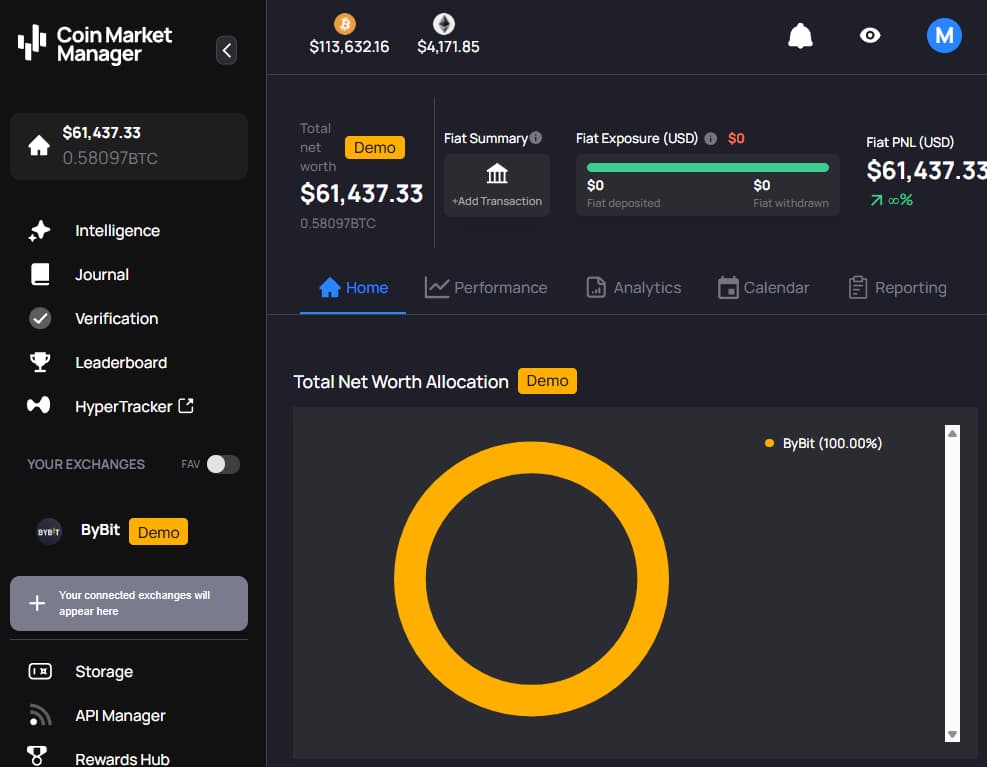
Coin Market Manager has established a specialty through operating more like a trading journal than a simple balance monitor. It excels at the detail-level of trading: it records each entry and each exit, calculates position-level PnL and develops a behavioral pattern of the trader. Most professionals run it as a pattern-analysis program – establishing what setups are successful and do setups leading to losses happen.
Example: A day trader reviewing three months of BTC trades can filter for setups involving leverage. The system shows win rate, average ROI, and drawdowns, giving insights into whether leverage improved results or hurt performance.
Weaknesses in broader portfolio tracking
Even with great trade-level analytics, Coin Market Manager falls short as a portfolio tracker. It doesn’t quite integrate with DeFi wallets or NFT markets, and reporting tools are designed more with performance analysis in mind as opposed to tax compliance. Long-term holders of numerous assets diversified out across chains could encounter blind spots with their net worth tracking.
“If you treat trading like a business, Coin Market Manager gives you the reports – but don’t expect it to track every corner of your portfolio.”
Balance of strengths and limits
For career traders and especially those with an interest in centralized exchanges, this platform presents unparalleled insight. For hobby investors or diversified holders, though, limited coverage results in it often complementing, rather than replacing, a generic portfolio monitor.
5. Blockpit (aka Accointing)
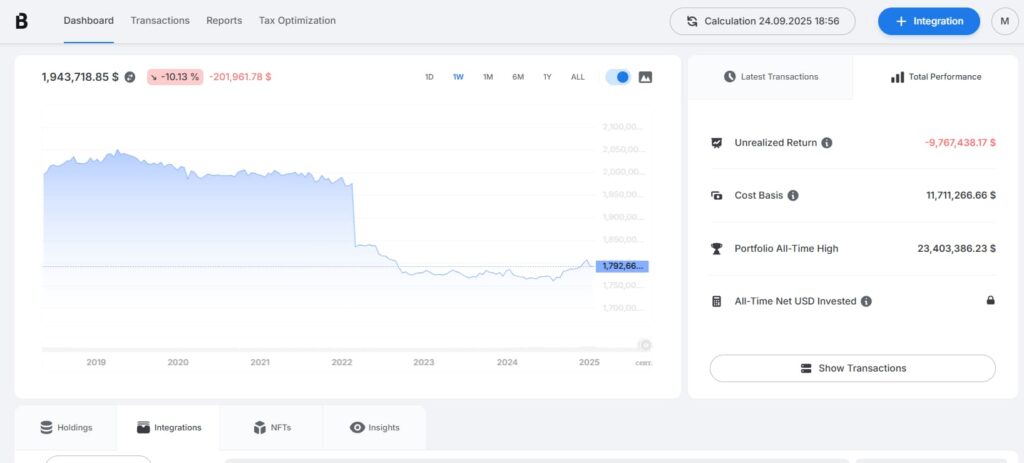
Blockpit built its reputation through simplifying tax reporting. It connects with exchanges and wallets, compiles histories of transactions, and puts them into tax formats specific to nations. For investors with jurisdictions that demand rigorous reporting, the nature of this feature alone might make it worthwhile.
Example: A German user can import hundreds of trades across Binance and MetaMask, and Blockpit will generate tax documents aligned with local regulations, saving days of manual work.
Beyond taxes, the system also provides basic ROI tracking, performance summaries, and portfolio allocation charts. However, these remain secondary to its compliance focus.
Usability challenges
Blockpit power is also its limitation. Too much stress on compliance makes an interface more appropriate for an accountant program rather than a trader dashboard. Newbies are unhappy with overly complex forms, and professional traders are sometimes perplexed with the layout.
It has a shallow integration of NFT and DeFi. While it excels at centralized exchange imports, it doesn’t perform well with manual adjustment or spot-level monitoring of largely manual-based decentralized assets.
“Blockpit saves you during tax season – but you won’t use it daily to watch your portfolio grow.”
Balance of strengths and limits
For tax-conscious investors, especially those with cross-border obligations, Blockpit is invaluable. But for traders seeking fast ROI updates or intuitive dashboards, it feels cumbersome and less engaging than other platforms.
6. Zapper
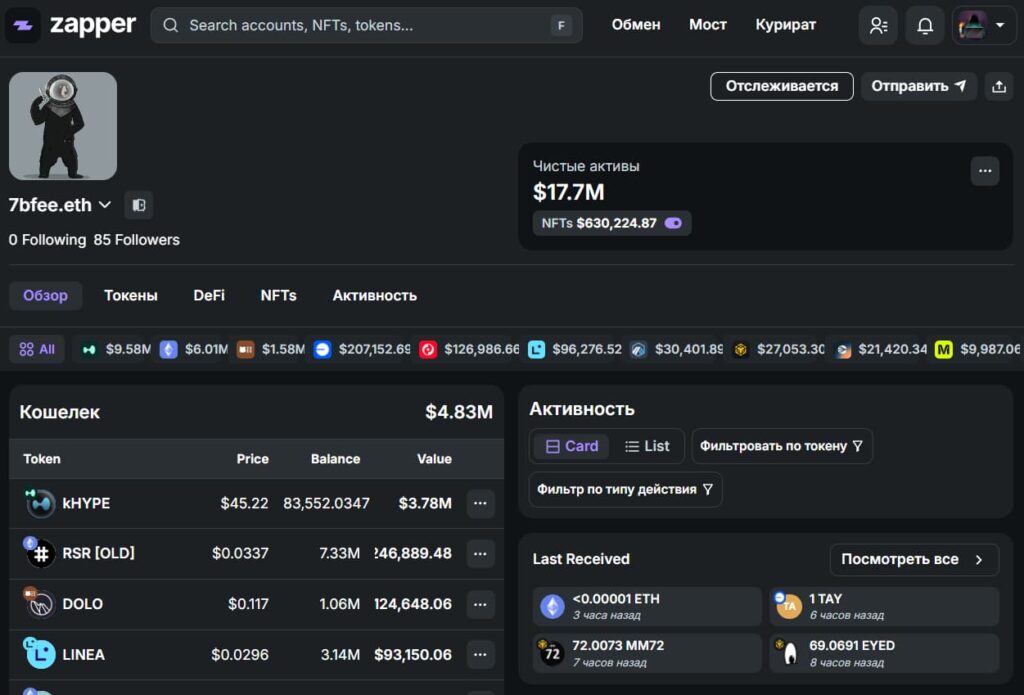
Zapper has become a home base app for those living inside the world of decentralized finance. It connects directly into self-custody wallets, scans on-chain data, and shows liquidity pool positions, staking rewards, and NFT portfolios. User interfaces are designed with native imperatives of DeFi at their core: instead of reflecting bank-like balances, it highlights yield opportunities, tokenized positions, and collectible valuations.
Example: A user providing liquidity on Uniswap and Curve can see both positions in Zapper, along with estimated yields and current token values. At the same time, their NFT gallery is displayed with floor price tracking, merging investments and collectibles in one dashboard.
Limited centralized exchange coverage
Where Zapper falls short is with centralized exchange integration. Binance, Coinbase, or Kraken holdings are generally entered individually or are pursued separately. For hybrid investors – i.e., CEX and DeFi combined – this leaves you with an incomplete picture.
Tax readiness is another limitation. Although Zapper looks great visually, it doesn’t offer powerful compliance exports. Investors requiring the detailed history of transactions for accounting purposes often use a complementary tool.
“Zapper is like a window into DeFi – but you’ll need another lens to see your entire portfolio.”
Balance of strengths and limits
Zapper excels at what it was designed to excel at: NFTs and decentralized coins. For anyone with a significant percentage of funds held off of centralized exchanges, or with a tax-reporting requirement, it best functions as a secondary assistant and not a replacement.
7. Bitwave
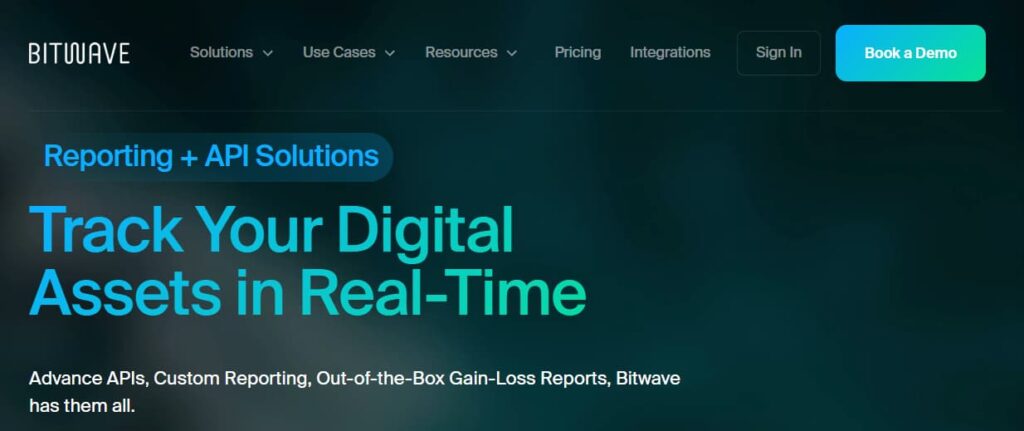
Bitwave is designed for funds, companies, and treasury/accounting teams that process digital assets at a corporate level. What it’s specifically interested in is corporate compliance at an enterprise level: making audit trails, integrating with ERP systems, and achieving regulatory compliance across a number of jurisdictions. What it’s of specific interest to corporate treasurers and CFOs are automated reconciliation, treasury/accounting dashboards, and sophisticated reporting.
Example: A U.S. fintech firm holding crypto on multiple exchanges can use Bitwave to sync transactions into QuickBooks or NetSuite automatically. This ensures that books remain consistent and audit-ready without manual intervention.
Unsuitability for retail investors
Although robust for institutions, Bitwave is too much for individual investors. Setup intricacy, business-class cost, and feature suite designed with accounting departments in mind render it unsuitable for armchair traders. Even semi-pro investors will not quite be able to justify the expense with less complicated trackers available that cover their needs.
“Bitwave is less of a portfolio app and more of a corporate accounting system built around crypto.”
Balance of strengths and limits
For business, Bitwave reduces compliance risks and integrates digital assets with mainstream financial workflows. For the retail customer, however, it’s inaccessible – economically and pragmatically. Being a niche product, it thrives with business but doesn’t concern the average trader.
Trends in Portfolio Management
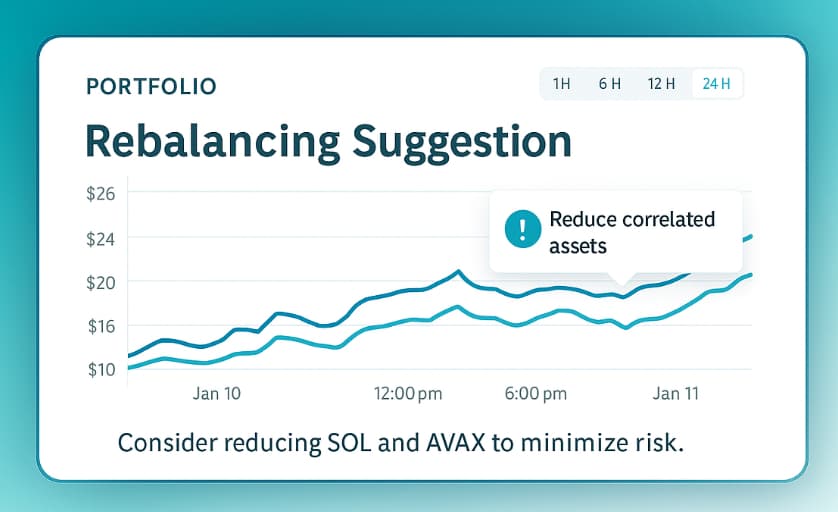
Most of these trackers are no longer static dashboards in 2025. Artificial intelligence components are being integrated to spot anomalies, forecast volatility and suggest rebalancing. Rather than leaving investors to interpret raw data themselves, tools are highlighting where risks are centred and making targeted recommendations.
Example: A tracker might warn a user that their holdings in correlated assets – like SOL and AVAX – expose them to similar risks. The system then suggests diversifying into less correlated tokens to reduce downside exposure.
Cross-chain integration as standard
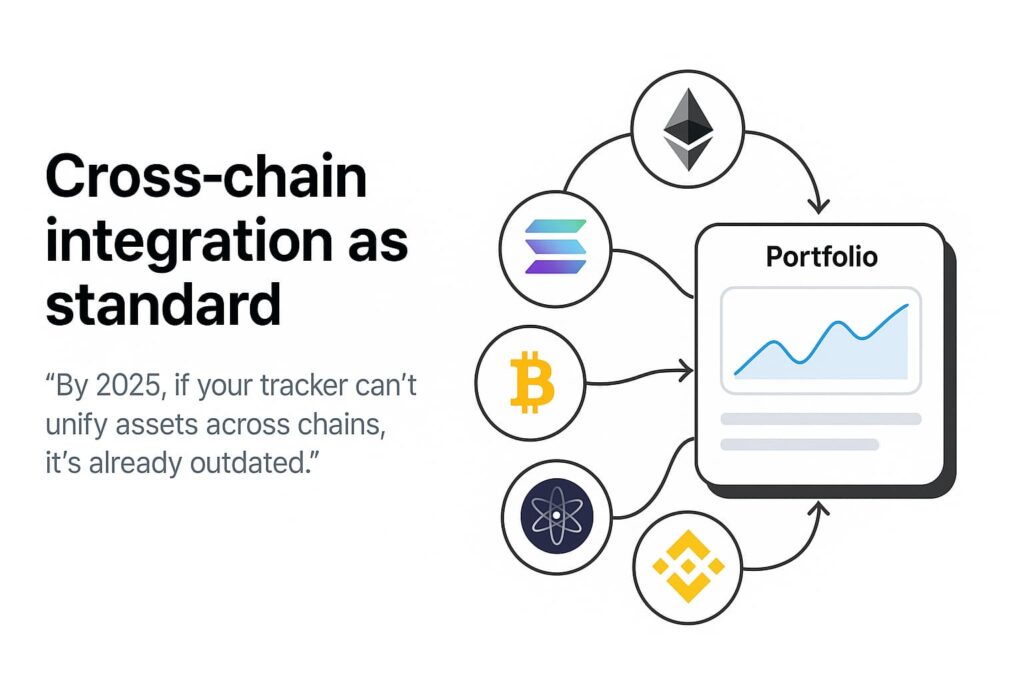
Chain fragmentation at long last is being resolved. Apps that used to show just Ethereum assets show Solana, BNB Chain, Polkadot, Cosmos, and L2s right out of the box. Investors are insisting on one dashboard where all chain balances roll up into one net worth. Cross-chain coverage once used to be a premium – it’s table stakes now.
“By 2025, if your tracker can’t unify assets across chains, it’s already outdated.”
Tax and compliance automation growth
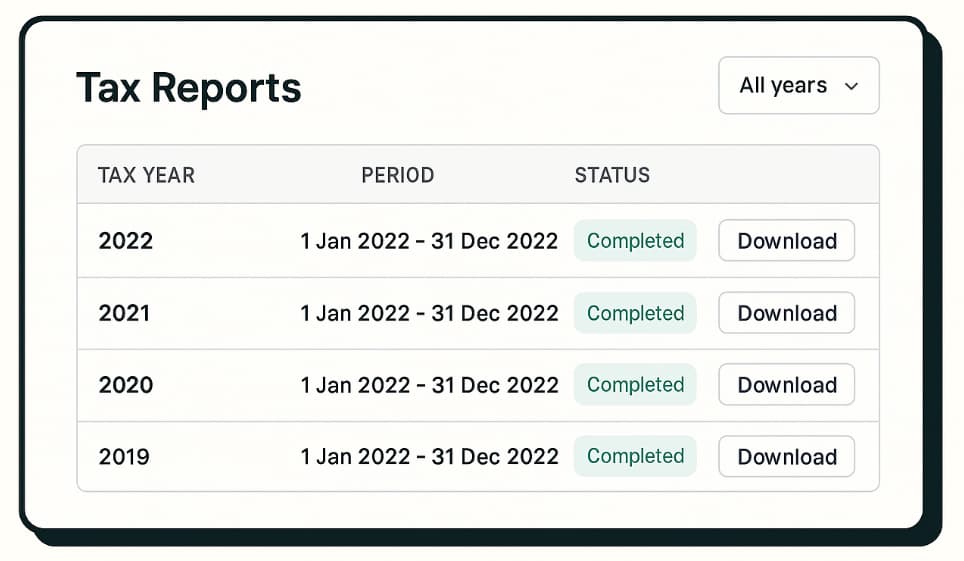
As regulators step up supervision, tax compliance has become unavoidable. Trackers also offer auto-export features that are tax software friendly and sometimes with jurisdictional filing templates. The shift spares investors hours of keystroke input and reporting error.
For institutional workstations, compliance integration goes further still: interfacing with accounting systems themselves, creating audit trails, and handling KYC/AML compliance. What once was an add-on has become one of the core reasons professional-grade software should be used.
FAQ
What is the best free crypto portfolio tracker in 2025?
There are still free and beginner-friendly versions out there. Programs like MetaTracker or CoinMarketCap Portfolio enable you to input assets individually and monitor their balances with no cost. However, free versions typically are limited with integrations and lack a long history of ROI.
How do I track both centralized exchange and DeFi assets?
You are going to need a tracker that merges both worlds. Zapper covers both worlds of DeFi and NFTs, and CoinDataFlow links out with full united reporting. Several of the superior used both of them with full coverage.
Can portfolio trackers aid with taxes?
Yes. Platforms like Blockpit (Accointing) and CoinDataFlow produce tax export files specific to your country. These can automatically be imported into an accounting program or filed directly with tax offices and save manual work and mistakes.
Are portfolio trackers safe to use?
Security is dependent upon permission. Credible websites request read-only API keys, i.e., they cannot transfer funds. CoinDataFlow and other non-custodian systems also stress privacy with locally stored data or encrypted crucial information.
Do trackers show ROI and PnL accurately?
Precision necessitates complete transaction history. Importing all exchanges and wallets enables websites to recalculate cost base and also show both unrealized and realized PnL. CoinDataFlow excels here as it synchronizes exchanges and chains with absolute ease.
What new features define 2025 trackers?
- AI-driven risk warnings and rebalancing advice
- Cross-chain portfolio aggregation
- Multi-asset coverage with stocks and ETFs
- Regional tax and compliance automation
Conclusion
Portfolio monitors became from nice-to-have convenience features in 2025 to a necessity. Spreadsheets and one-exchange dashboards are no longer acceptable. With the pace and sophistication of markets as we know today, accuracy, automation, and tax preparedness are what investors demand.
Comparison of leading sites shows how each instrument has created a niche:
- CoinDataFlow stands out through the integration of real-time price data with correct ROI/PnL tracking and multi-asset coverage.
- MetaTracker is suitable for beginners but becomes limited very soon.
- Shrimpy offers automation, though at a cost in both sophistication and price.
- Coin Market Manager is suitable for sophisticated traders with advanced analytics, but portfolio coverage is restricted.
- Blockpit (Accointing) has good compliance capabilities, yet usability feels awkward.
- Zapper offers premier-level DeFi and NFT views while lacking centralized integration.
- Institutions can’t be beaten with Bitwave, yet useless for retail customers.
Out of all of these, CoinDataFlow offers the best-balanced solution and comes with accuracy, width, and privacy-friendly architecture. It manages a way of satisfying retail users alongside traders and semi-professional managers while neither overpowering nor disappointing.
“The best tracker is not the one with the most features – it’s the one that makes your financial picture clear when you need it most.”
Looking ahead, the future points to even more integration: AI-driven recommendations, seamless cross-chain visibility, and tighter links with traditional finance dashboards. Choosing the right tracker today means being prepared for tomorrow’s demands.