What is the Future of RWAs in Blockchain?
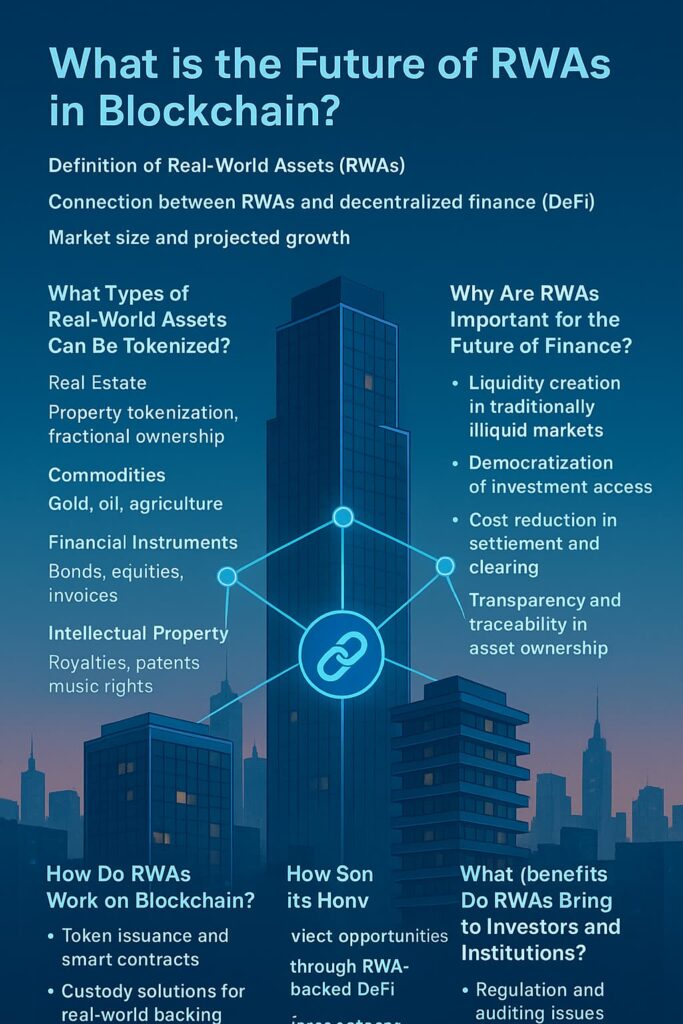
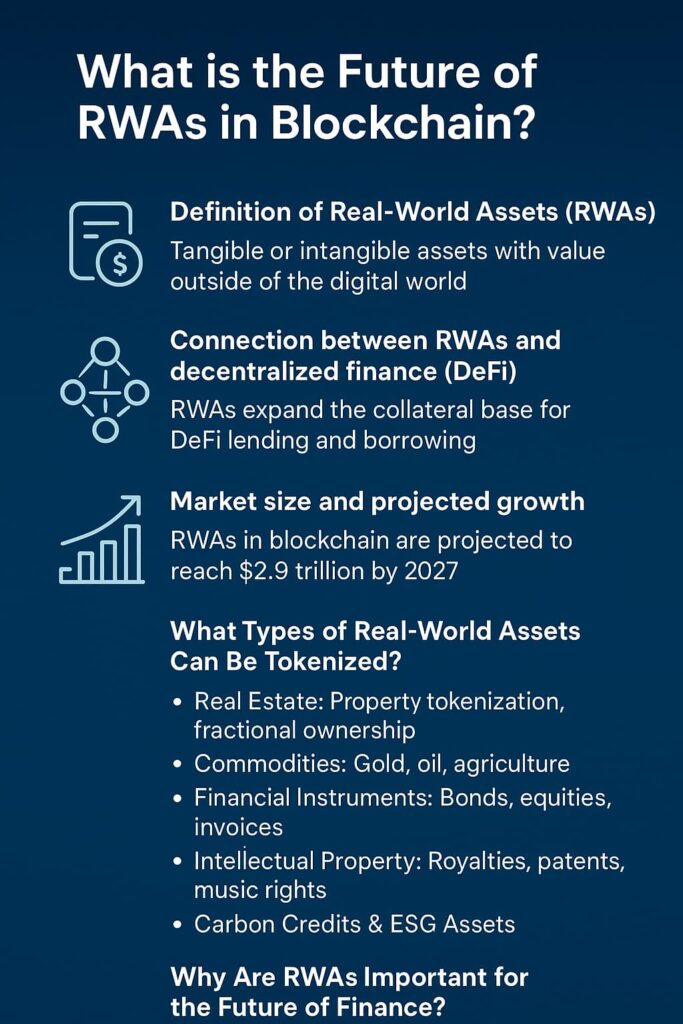
Real-World Assets (RWAs) are physical or traditional financial assets—like real estate, commodities, bonds, or intellectual property—that are digitally represented on a blockchain. Tokenization allows these assets to be fractionalized, traded, and integrated into decentralized finance (DeFi) ecosystems.
RWAs bridge the gap between traditional finance (TradFi) and blockchain innovation, making assets more accessible and transparent.
Connection between RWAs and Decentralized Finance (DeFi)
DeFi protocols initially relied on crypto-native collateral like ETH or stablecoins. However, volatility limited adoption. RWAs solve this by introducing stable, tangible assets as collateral.
For example:
- Tokenized real estate can back loans.
- Corporate bonds can provide stable yield.
- Invoices can be financed through blockchain marketplaces.
This integration enhances liquidity while making DeFi attractive to both retail and institutional investors.
Market Size and Projected Growth
The global RWA tokenization market is still in its early stages but is projected to exceed $16 trillion by 2030. Institutional players, from BlackRock to JPMorgan, are actively exploring tokenization to modernize financial infrastructure.
As adoption grows, RWAs will become a cornerstone of the digital economy, reshaping how assets are owned, traded, and financed.
What Types of Real-World Assets Can Be Tokenized?
Real Estate: Property Tokenization & Fractional Ownership
Real estate tokenization enables investors to buy fractions of properties, lowering entry barriers. This creates global real estate markets accessible from a smartphone.
Commodities: Gold, Oil, Agriculture
Tokenized commodities allow real-time trading and settlement. For example, digital gold tokens already exist as stable collateral in DeFi.
Financial Instruments: Bonds, Equities, Invoices
From government bonds to company invoices, financial instruments can be tokenized for instant settlement and yield opportunities.
Intellectual Property: Royalties, Patents, Music Rights
Artists, inventors, and creators can tokenize future royalty streams, giving investors a chance to back creative projects.
Carbon Credits & ESG Assets
Sustainability-linked assets like carbon credits are increasingly being tokenized, ensuring traceability and verifiable impact.
Why Are RWAs Important for the Future of Finance?
- Liquidity in Illiquid Markets – Assets like real estate become easier to trade.
- Democratization of Investment – Anyone with internet access can participate.
- Reduced Costs – Settlement and clearing processes are automated via smart contracts.
- Transparency & Traceability – Blockchain records ensure auditability.
RWAs create a more open, efficient, and inclusive financial system.
How Do RWAs Work on Blockchain?
- Token Issuance & Smart Contracts – Assets are tokenized into blockchain-based tokens.
- Custody Solutions – Trusted custodians ensure physical or legal asset backing.
- Legal & Compliance Layers – Regulations like MiCA in the EU are evolving to protect investors.
- Oracles & Data Feeds – External data (like real estate prices) is brought on-chain for accuracy.
What Benefits Do RWAs Bring to Investors and Institutions?
- Yield Opportunities – RWA-backed DeFi protocols generate stable returns.
- Portfolio Diversification – Reduces dependence on volatile crypto assets.
- Risk Reduction – Tangible assets provide stable collateral.
- Global Participation – Investors from different countries can access the same assets.
What Are the Challenges for RWA Adoption?
- Regulatory Uncertainty – Different jurisdictions have conflicting rules.
- Valuation & Auditing – Ensuring fair asset valuation remains complex.
- Custodianship Risks – Who holds the physical assets?
- Technical Hurdles – Blockchain scalability and interoperability must improve.
Which Companies and Protocols Lead RWA Development?
- MakerDAO – Pioneering RWA collateral integration.
- Centrifuge & Goldfinch – Focused on credit and invoice tokenization.
- Ondo Finance – Bridging TradFi and DeFi.
- Traditional Banks – JPMorgan, Citi, and others exploring tokenization pilots.
What Does the Future Hold for RWA Integration?
- Institutional Adoption – Banks and funds onboarding tokenized assets.
- CBDCs & Stablecoins – Seamless settlement of tokenized RWAs.
- Cross-Chain RWA Platforms – Interoperability across blockchains.
- Global Infrastructure Role – Tokenized assets becoming the standard in financial markets.
How Can Individuals Participate in the RWA Future?
- Invest in RWA Tokens via DeFi platforms.
- Join Protocols like Centrifuge or Goldfinch.
- Use Tokenized Assets in lending and borrowing.
- Stay Informed about evolving regulations to capture early opportunities.
FAQs About RWAs in Blockchain
Q1: What are Real-World Assets (RWAs) in blockchain?
RWAs are physical or traditional financial assets that are tokenized and represented on a blockchain for easier trading and investment.
Q2: Why are RWAs important for DeFi?
They bring stability, liquidity, and mainstream appeal to DeFi by introducing tangible collateral.
Q3: What types of assets can be tokenized?
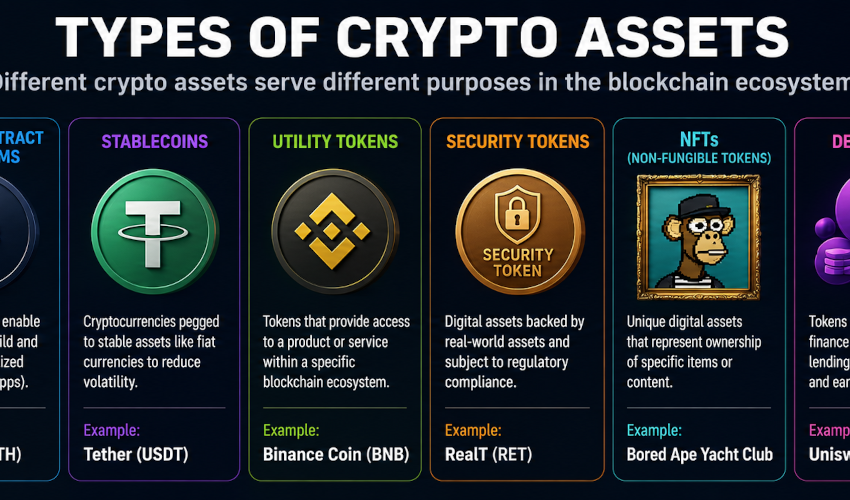
Real estate, commodities, bonds, equities, invoices, intellectual property, and even carbon credits.
Q4: Are RWAs regulated?
Yes, but regulations differ globally. The EU’s MiCA framework and the U.S. SEC’s guidelines are leading developments.
Q5: How can investors participate?
By buying RWA-backed tokens, joining DeFi protocols, or exploring tokenized funds.
Q6: What is the future of RWAs?
A trillion-dollar opportunity where RWAs reshape global finance by merging blockchain efficiency with traditional assets.
Conclusion
The future of RWAs in blockchain is bright and transformative. From real estate and commodities to intellectual property and carbon credits, tokenization unlocks liquidity, inclusivity, and efficiency in finance.
While challenges remain—particularly in regulation and custody—the momentum is undeniable. RWAs are poised to become the foundation of digital finance, bridging the gap between blockchain innovation and traditional financial markets.